Where to Find the Best Magazines for the Paving Industry

Magazines for road and driveway Construction, Asphalt, Striping and Sealcoating Industry

When it comes to staying informed in the paving, pavement and asphalt world, industry magazines remain one of the most valuable resources for professional contractors, engineers and suppliers. Whether you’re interested in the latest technology, best practices, case studies, or industry news, there are a range of publications that cover topics from design and maintenance to new equipment, software, innovations and sustainability.

Why Paving Industry Magazines Matter

Magazines focused on pavements, parking lots, concrete and asphalt serve multiple purposes. They inform readers on current trends in materials and equipment, provide insights into regulatory changes and safety best practices, showcase real-world paving projects, and keep professionals abreast of innovations in pavement design and maintenance techniques. These publications also help businesses connect with new ideas and technologies that can improve efficiency and project outcomes.

Top reading material for Pavement and Asphalt Professionals

Here are some of the best online magazines and resource hubs covering paving, sealcoating, asphalt, concrete and pavement topics:

Asphalt Pavement and Paving Magazines

  • NAPA Quarterly – A quarterly magazine from the National Asphalt Pavement Association (NAPA) covering asphalt technology, best practices, safety, and innovation.  
  • Asphalt Pavement Magazine – The current edition and archive of the national industry magazine focused on asphalt paving topics.  
  • Asphalt Contractor Magazine – A long-running industry publication with issues covering equipment, technology, business, and materials.  
  • Pavement Maintenance & Reconstruction Magazine – Focused on pavement preservation, maintenance and reconstruction strategies, materials, and methods.  
  • California Asphalt Magazine – In-depth coverage of trends and issues impacting the asphalt industry in California and beyond.  

Broader Pavement & Industry Resources

  • Pavement News – A news site dedicated to the latest industry developments, equipment updates, and market news across asphalt, concrete and chip seal paving.  
  • Pavement Interactive – Not strictly a magazine but an excellent online paving knowledge hub with articles, tools, and technical information for engineers and contractors.  

How to Use These Resources

Adding links to these magazines on your website or blog not only brings value to your readers but also helps improve your site’s SEO by connecting to authoritative industry content. Encourage your audience to subscribe to newsletters, follow magazine blogs, or explore issue archives for ongoing learning.

Whether you’re a paving contractor, civil engineer, equipment supplier, or pavement enthusiast, these magazines are indispensable tools in keeping up with the dynamic world of asphalt, concrete, sealcoating and pavement construction.


Do you run a magazine or journal that would benefit the paving industry? Please let us know and we can list for free.
How Much Does Driveway Paving Cost in the U.S.?

Driveway Paving Costs in the U.S.A

Driveway paving cost is one of the first things homeowners want to know and for good reason. Prices can vary widely depending on materials, size, and location. Below is a clear, up-to-date breakdown of what you can expect to pay in the United States.

Average Driveway Paving Cost

Most U.S. homeowners spend between $3,000 and $7,000 to pave a driveway. Smaller asphalt driveways may cost less, while large or decorative projects in concrete or designer pavers can cost significantly more.

Cost Per Square Foot by Material

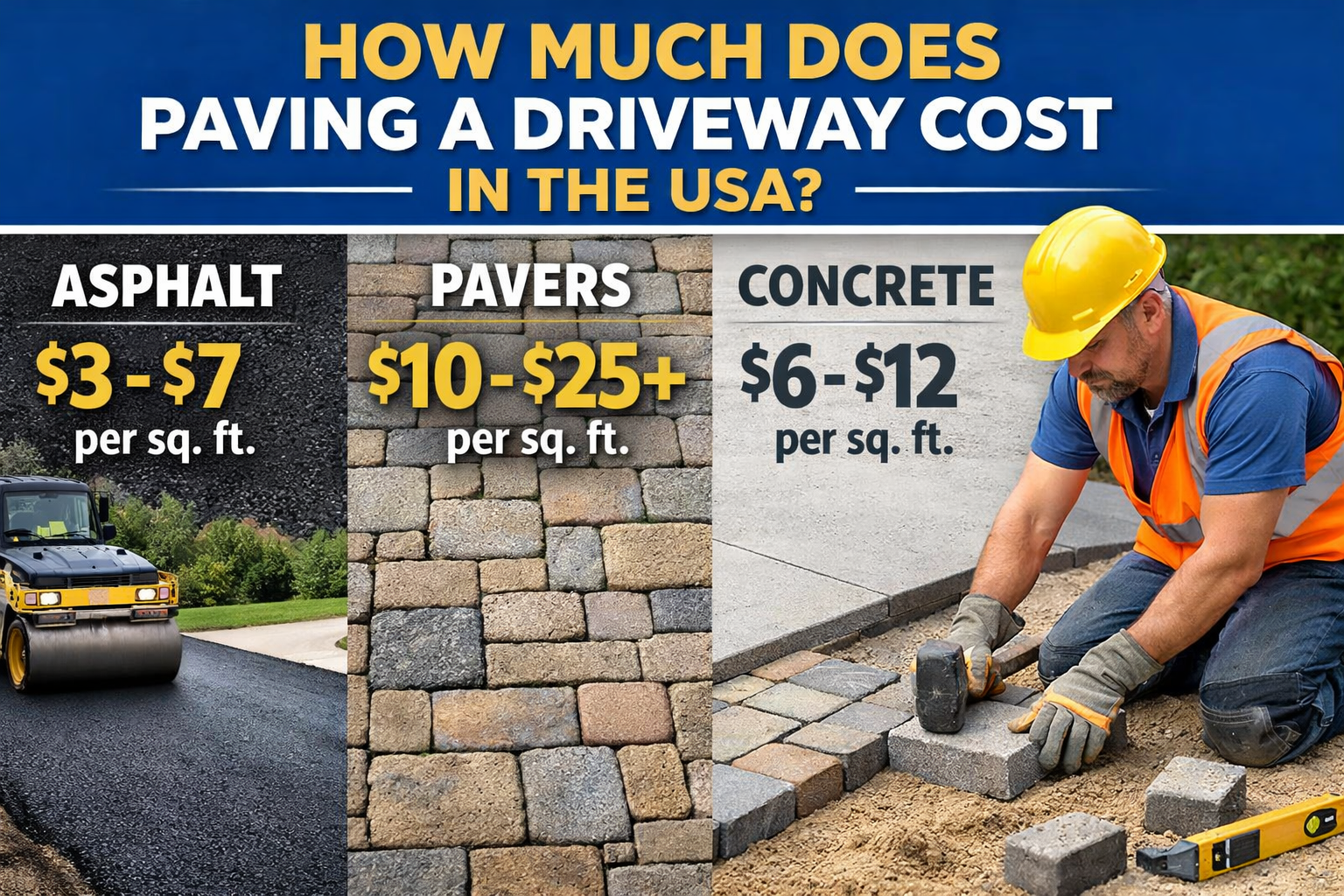
  • Asphalt: $3 – $7 per sq ft
  • Concrete: $6 – $12 per sq ft
  • Pavers: $10 – $25+ per sq ft

As you can see from the prices above, asphalt remains the most affordable and popular option due to its lower upfront cost and quicker installation.

What Affects Driveway Paving Cost?

Several factors influence your final price:

  • Driveway size & thickness
  • Base preparation and grading
  • Removal of an old driveway
  • Drainage requirements
  • Local labor and material costs

Please be aware and cautious that poor base prep may lower initial costs but often leads to expensive repairs later.

Asphalt vs Concrete: Cost Comparison

While asphalt is cheaper upfront, concrete may last longer with less maintenance. Asphalt typically lasts 20–30 years with proper care, while concrete can last 30+ years but costs more to install. Pavers are generally made from concrete (although PVC paver are now available using recycled plastic) so fall into the concrete category.

Is Driveway Paving Worth It?

There are many reasons to put value on how paving a driveway with asphalt, concrete or pavers can be seen. But as there is often a great improvement in the appearance and functionality of having a driveway paved you can save money in the long term. We should assume that there is an overall benefit as costly repairs or an unsightly appearance are negated. A professionally paved driveway:

  • Improves curb appeal
  • Increases property value
  • Reduces long-term maintenance issues

For most homeowners, paving their drive, walkway or pavement is a strong long-term investment. In many case it can add financial value to your property.


Get an Accurate Paving Estimate

Every property is different. The best way to know your exact cost is to get a professional evaluation based on your driveway’s condition and goals. You should always look to get at least a couple, if not more, estimates to pave your driveway. Asking others such as friends and family for their recommendations is a great way to help find local paving contractors.

Contact a local paving contractor for a free estimate and expert recommendations.

How to maintain asphalt

How to Maintain Asphalt: A Complete Guide for Long-Lasting Pavement

Asphalt is one of the most popular paving materials across North America and the rest of the world. It’s a popular choice thanks to its durability, affordability, and clean appearance. However, like any surface exposed to weather, traffic, oil, and UV rays, asphalt requires regular maintenance to reach its full lifespan. So here we are looking at how to maintain your asphalt. Proper care not only keeps your pavement, driveway, parking lot or walkway looking great but also saves you thousands of dollars in premature repairs or replacement.

In this guide, we’ll cover how to maintain asphalt, including top tips, do’s and don’ts, cleaning products to use (and avoid), seal coating, lifespan expectations, and how to find the right contractor or products if you prefer not to do it yourself.

Why Asphalt Maintenance Matters

Unmaintained asphalt can crack, fade, soften, and deteriorate quickly—especially in North America, where freeze-thaw cycles, snow removal, road salt, and intense summer heat take a toll. Routine maintenance protects your investment, improves safety, and boosts curb appeal.


Disclaimer – This guide is just our opinion. It should not be considered as professional advice. You should always consult a professional before carrying out any work.


Top Tips for Maintaining Asphalt

  • Inspect regularly: Walk your driveway or parking lot at least twice a year, especially after winter.
  • Clean frequently: Dirt, leaves, and debris trap moisture that accelerates damage.
  • Address small issues early: Filling small cracks early prevents water infiltration and larger failures.
  • Protect from chemicals: Gas, oil, antifreeze, and de-icing salts can weaken asphalt over time.

Asphalt Maintenance Do’s and Don’ts

✅ Do:

  • Sweep or blow off debris regularly
  • Wash asphalt with mild soap and water
  • Fill cracks as soon as they appear
  • Seal coat at recommended intervals
  • Redirect water away from the surface

❌ Don’t:

  • Ignore cracks or potholes
  • Use harsh chemicals or degreasers
  • Power wash with excessive pressure
  • Park heavy vehicles in the same spot repeatedly
  • Apply seal coat too often or too soon

Cleaning Products: What to Use and What to Avoid

✔ Products You Should Use:

  • Mild dish soap or asphalt-safe cleaners
  • Water and soft-bristle brooms
  • Biodegradable oil-spot cleaners labeled safe for asphalt

✖ Products You Should Avoid:

  • Solvent-based degreasers
  • Gasoline or diesel fuel
  • Bleach or ammonia
  • Acidic or citrus-based industrial cleaners

Harsh chemicals strip asphalt’s binding oils, leading to premature cracking and fading.

Should I Seal Coat My Asphalt?

Yes. Seal coating is one of the most effective ways to extend asphalt life.

Seal coating:

  • Protects against UV rays and oxidation
  • Repels water, oil, and chemicals
  • Restores a deep black appearance

When to seal coat:

  • New asphalt: Wait 6–12 months. Always consult the paving company that laid the asphalt for when is the best time after installation to apply a seal coat
  • Existing asphalt: Every 2-4 years, depending on climate and traffic

Over-sealing can cause surface peeling, so timing matters.

What Is the Lifespan of Well-Maintained Asphalt?

In North America:

  • Unmaintained asphalt: 10–15 years
  • Properly maintained asphalt: 20–30 years

Regular cleaning, crack sealing, and seal coating can easily double your pavement’s usable life.

Hiring a Contractor for Asphalt Maintenance

If you don’t want to handle maintenance yourself, hiring a professional is a smart option.

How to Find a Reliable Contractor:

  • Search locally: “asphalt maintenance near me”
  • Look for licensed and insured contractors
  • Read Google and local reviews
  • Ask for references and written estimates
  • Avoid door-to-door or “leftover material” offers

A reputable contractor will inspect your pavement and recommend only necessary services.

How to Find the Best Asphalt Maintenance Products

When shopping for DIY products to maintain your driveway or pavement asphalt:

  • Look for asphalt-specific labeling
  • Check reviews from North American users
  • Buy from reputable suppliers or paving distributors
  • Avoid “one-size-fits-all” concrete/asphalt products

Search terms like “best asphalt crack filler for cold climates” or “driveway seal coat for northern states” can help narrow down high-quality options. You can also find a lot of information on the latest cleaning and maintenance products by reading industry magazines. They are a great source of information for both the trade and homeowners.

Final Thoughts on how to maintain asphalt

Maintaining asphalt doesn’t have to be complicated, but it does require consistency. With the right cleaning methods, products, seal coating schedule, and professional support when needed, your asphalt surface can remain strong, safe, and attractive for decades. Whether you’re a homeowner or property manager, proactive maintenance is always cheaper than replacement.

The biggest paving companies in the world

Who are the worlds biggest paving companies?

The world’s biggest paving companies play a crucial role in shaping the infrastructure and development of our cities and communities throughout the world on every continent. These companies are responsible for constructing and maintaining the roads, highways, parking lots, and other paved surfaces that are essential for transportation and accessibility.

Below, we’ll take a closer look at the top 10 most influential & biggest paving companies in the world.

Continue reading “The biggest paving companies in the world”